Efficient Policy Matrix: Powering Sustainability and Productivity in the Science Laboratory Profession
Delivering her keynote address on “Efficient Policy Matrix: Powering Sustainability and Productivity in the Science Laboratory Profession” at the annual national conference and scientific workshop, organized by the Association of Science Laboratory Technologists of Nigeria (ASLTON) in collaboration with the Nigerian Institute of Science Laboratory Technology (NISLT), Prof. Eucharia O. Nwaichi looked at the Challenge and Opportunity, an Efficient Policy Matrix, Case Examples and Success Stories, Future-Ready Workforce and Innovation, she also looked at What?
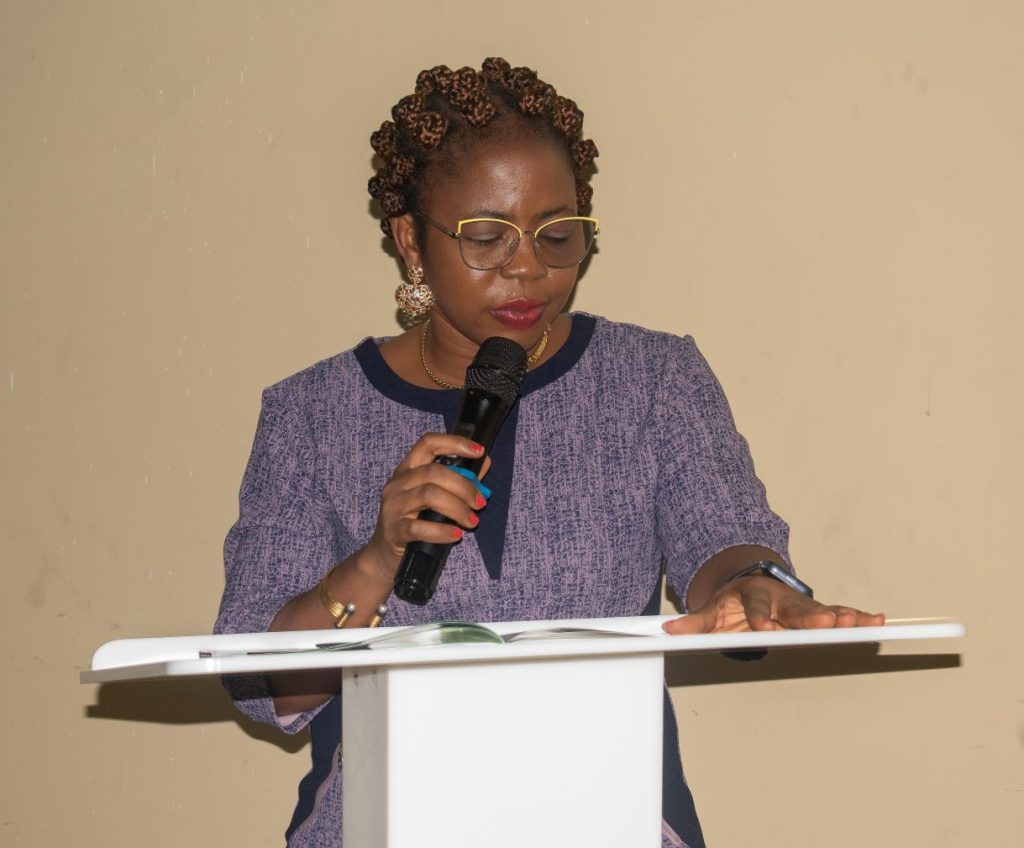
Director, Academic Planning and Research Control, University of Port Harcourt, Prof. Eucharia O. Nwaichi Delivering the Main Lecture at the Conference
Today, Prof. Eucharia O. Nwaichi said that the Science Laboratory Technology professionals, whose skills are the backbone of Nigeria’s scientific integrity, are being celebrated with a very loud bang while looking forward to building a system that would empower them to thrive sustainably and productively as professionals, who, every day are behind every test result, every environmental assessment, every safety check, a science laboratory technologist whose work often goes unseen, yet they ensure medicines are safe, water is clean, industrial processes are accurate, and research breakthroughs become reality.
In her address, Prof. Nwaichi saw celebrating 40 years of ASLTON/NISLT as an opportunity for Science Laboratory Technology (SLT) professionals to transform laboratories into engines that drive national development: from healthcare and education to energy, environment, agriculture, and industrial competitiveness. She further said that the SLT profession would flourish only when there is a clear and coherent policy direction, recognition and empowerment of practitioners and sustainable investment in tools, training, and technology.
She insisted that Nigeria has brilliant science laboratory technologists; therefore, the solution is to build a policy matrix that would unlock their maximum contribution to national development.
While still speaking, she said Policy is not paperwork but a development tool, hence when policy works, laboratories become safer, more innovative, and productive. When it fails, the consequences ripple into undermining public health, diminishing educational outcomes, and weakening industrial competitiveness.
She further explained that in continuing SLT professional development, an Efficient Policy Matrix for a sustainable and productive Laboratory Profession must be structured in a way that aligns evidence, resources, and governance to maximize productivity and that when policy, infrastructure, and expertise align, it leads to Future-Ready Workforce and Innovation, resulting from mentorship, continuous learning, and cross-sector collaboration, which is the compass to navigate this future successfully with AI, Biosafety, Diagnostics, Data analytics as future skills for Laboratory Technologists.
Having said all that had been said, so what? She asked and explained that as the Science Laboratory Technologists mark 40 years of excellence, they should commit to a few bold actions, such as advocate for policy reforms that streamline accreditation and recognition, invest in modern laboratory infrastructure and sustainable funding models, strengthen research-to-policy pathways using Evidence-Informed Decision-Making (EIDM) technology, keep laboratories at the center of national progress, support skills development for the next generation of technologists.
Prof. Nwaichi encouraged the technologists to transform Nigeria’s laboratories into powerhouses of innovation, productivity, and societal impact, insisting that to keep the laboratories productive, respected, and globally competitive, technologists must move from conversations to bold actions.
She advised technologists to be present in the international scene, which she said was very easy, depending on how they packaged themselves using some of the social media handles. Prof. Nwaichi assured that they will be highly sought after should they tell the world, for example, that they are a research laboratory technologist with a focus on molecular diagnostics, they design and maintain experimental setups, train new scientists on laboratory safety and equipment use, and troubleshoot protocol failures, so experiments don’t collapse, that their goal is to make research faster, safer, and more reproducible, especially in fields that impact health and the environment.
Using world-class laboratories as an example for additional explanation, Prof. Nwaichi said that technologists do not stay behind; they travel, collaborate, and shape outcomes. Stating evidence on assignment in Poland with laboratory technologists, Prof. Nwaichi said they were not assistants, they were knowledge carriers and that their joint work with colleagues in the Czech Republic on trans-boundary waste management was powered by technicians who knew the instruments, the data, and the science beneath the politics. Again, she opined that science diplomacy is possible because technologists translate laboratory results into evidence that policymakers can understand.
While advising that technologists should build the Future of Science, Technology, Engineering and Mathematics (STEM), together, Prof. Eucharia Oluchi Nwaichi challenged all the SLT professionals not to let laboratories remain rooms that test samples, rather make them engines of national progress, celebrate your role, champion your profession, and lead with evidence, excellence, and courage. The years ahead can even be brighter if the SLT professionals build it together, she said.